Matthias Fletzberger
Conductor • Pianist
Music is created where people breathe, listen, and create together.
Matthias Fletzberger
Conductor • Pianist
Music begins with listening

Matthias Fletzberger's musical work begins with close listening – and from this, musical shaping emerges directly, often with results that were not taken for granted beforehand. Musicians describe working with him as attentive, precise, and inspiring. Thus, even with an orchestra that does not yet know him, a solid musical understanding often develops as early as the first rehearsal. This attitude shapes his work regardless of the repertoire – equally in the German, Italian, or French fachs.
Matthias Fletzberger's musical work begins with close listening – and from this, musical shaping emerges directly, often with results that were not taken for granted beforehand. Musicians describe working with him as attentive, precise, and inspiring. Thus, even with an orchestra that does not yet know him, a solid musical understanding often develops as early as the first rehearsal. This attitude shapes his work regardless of the repertoire – equally in the German, Italian, or French fachs.
Make an orchestra resonate
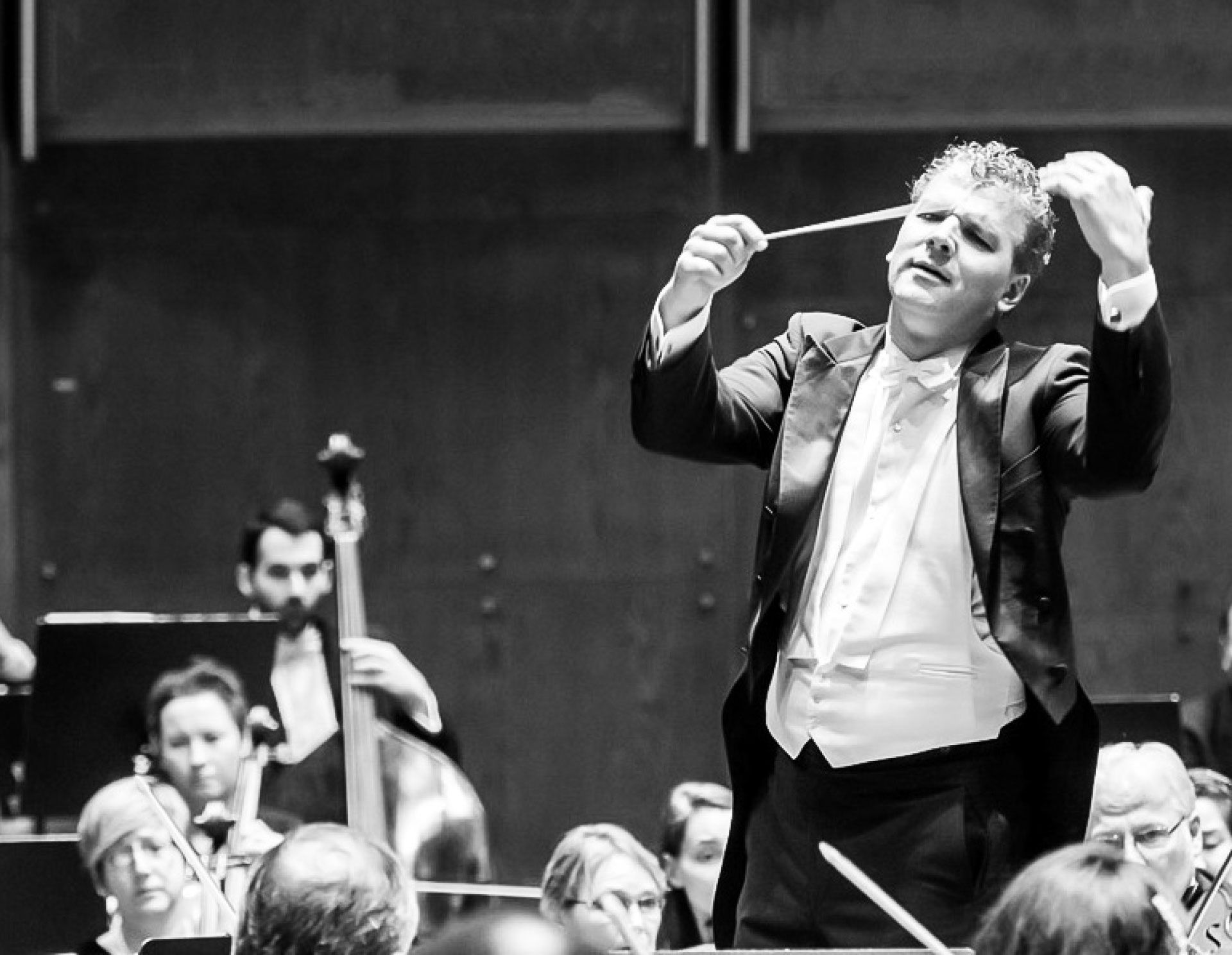
Conductors are often measured by what they can achieve with an orchestra in a short amount of time. Critics, orchestral musicians, and audiences alike notice the difference when, under Matthias Fletzberger's direction, an orchestra's sound, balance, and musical presence transform—becoming more cohesive, more precise, and seemingly elevated to a higher class. His goal in doing so: to bring out what is already inherent in every orchestra and make it audible within the shortest possible rehearsal time. He has had this experience with orchestras on every continent—from the Prague State Opera to the stage of Lincoln Center in New York and on to the Far East.
Conductors are often measured by what they can achieve with an orchestra in a short amount of time. Critics, orchestral musicians, and audiences alike notice the difference when, under Matthias Fletzberger's direction, an orchestra's sound, balance, and musical presence transform—becoming more cohesive, more precise, and seemingly elevated to a higher class. His goal in doing so: to bring out what is already inherent in every orchestra and make it audible within the shortest possible rehearsal time. He has had this experience with orchestras on every continent—from the Prague State Opera to the stage of Lincoln Center in New York and on to the Far East.
The Art of Accompaniment

Especially in opera, it becomes evident how much musical interpretation depends on the interaction of all participants. Singers particularly appreciate his ability to listen to them, incorporate their musical impulses, and at the same time maintain the grand dramatic arc. Reviews repeatedly highlight the balanced interplay between the stage and the orchestra as well as the meticulous musical preparation. This sensitivity to the voice is rooted in his experience as a pianist and song accompanist, which he brings directly into his collaboration with the orchestra.
Especially in opera, it becomes evident how much musical interpretation depends on the interaction of all participants. Singers particularly appreciate his ability to listen to them, incorporate their musical impulses, and at the same time maintain the grand dramatic arc. Reviews repeatedly highlight the balanced interplay between the stage and the orchestra as well as the meticulous musical preparation. This sensitivity to the voice is rooted in his experience as a pianist and song accompanist, which he brings directly into his collaboration with the orchestra.
When musical work becomes audible
What is created in rehearsals ultimately shows in the sound. Reviews particularly describe the ability to develop a shared musical language with an orchestra within a short time – with attention to tone colors, proportions, dramatic development, and the interaction between stage and orchestra.
Conductor Matthias Fletzberger led an orchestra that sounded confident and well-rehearsed. The string sound was warm and the balance well-adjusted. However, Fletzberger also showed a knack for lyrical interludes.
Montreal Gazette
One could hardly believe that the same State Opera Orchestra (obviously in a much larger ensemble) was playing that had struggled so much with Beethoven's Fidelio at the Estates Theatre a month ago. It was certainly the credit of the conductor Matthias Fletzberger, who led the orchestra through the sudden musical turns of the Ring with a well-balanced sound.
Opera Plus
Of great importance was the leadership of Maestro Matthias Fletzberger, who guided the orchestra and choir with a sure gesture, musical sensitivity, and brilliant communication skills in an exceptional manner.
The Strait Journal
Incredible how well the orchestra played under Matthias Fletzberger! If we hadn't known, nobody would have thought in what short time they had learned this demanding piece of all things.
The new flag
The performance of the orchestra was very good, thanks in no small part to Fletzberger's outstanding direction, which made us realize even more what this orchestra could achieve locally, but also on tour.
tempostretto.it